TL; DR
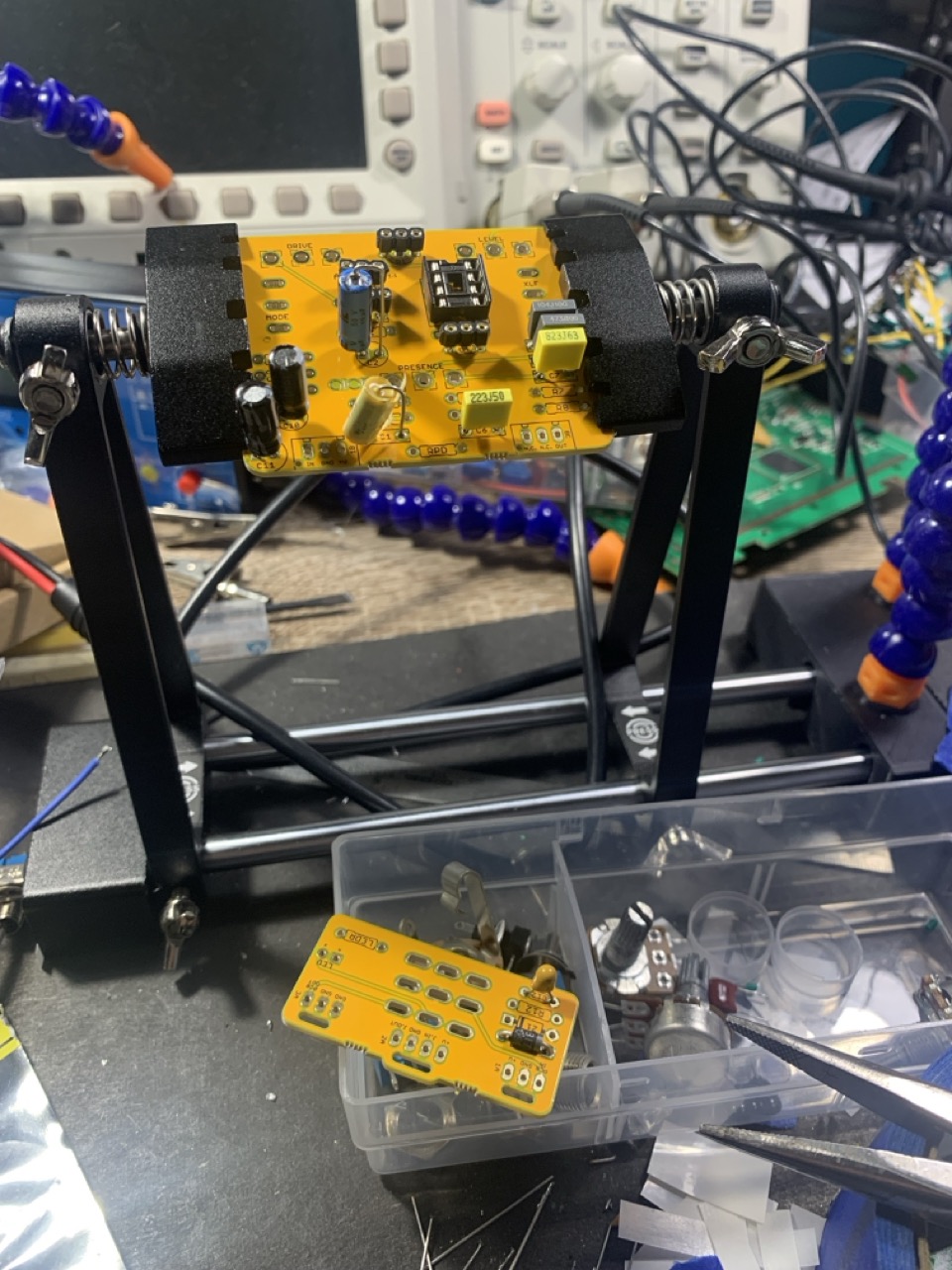
Built a very classic, clever single op-amp circuit that delivers a minute compressed overdrive into mild distortion (with natural clipping from design, no diodes) to complete full-on fuzz level distortion. All that means I build an almost exact Crowther Hot Cake guitar pedal clone from AioxFX (Anomaly). Check it out!
Back Story
I was loitering on AionFX, looking at PCB(s) and had a great time reading the trace notes of the Crowther Hot Cake.
With so many "cookie-cutter" dual op-amp circuits out there with a pair of soft or hard clipping diode(s), this is pretty unique, clever and definitely refreshing to push the limits on a single op-amp, not to mention it's a a 40y design!
I've listened to plenty of Hot Cake demo's on Youtube; this one being a pretty killer and 100% honest sonic and tonal honest representation vs. a very "home studio'd up" and over-blathered-about layered with 800 over effects (at times) to get clicks and ad revenue.
The Build
What else is there left to do? Let's get on with what I did for a build!
Schematic + Parts List
Here is the direct link to the Crowther Hot Cake clone 'Anomaly' (AionFX) and the part(s) list + PCB.
For enclosure, I used non painted, aluminum Hammond-like 1590N1 from amplifiedparts.com.
For knobs, I used what I had on hand - a 3-set of Davies 1550 pointers from amplifiedparts.com
For diodes, do go out to your favorite parts store (e.g. Tayda, Digikey, Mouser, etc.) and get the exact ones references. AionFX does a marvelous trace and recreation of circuits; and they do sell this as a complete close-to-original kit, to boot, so it's not marginalized "part guessing".
Changes and Customization(s)
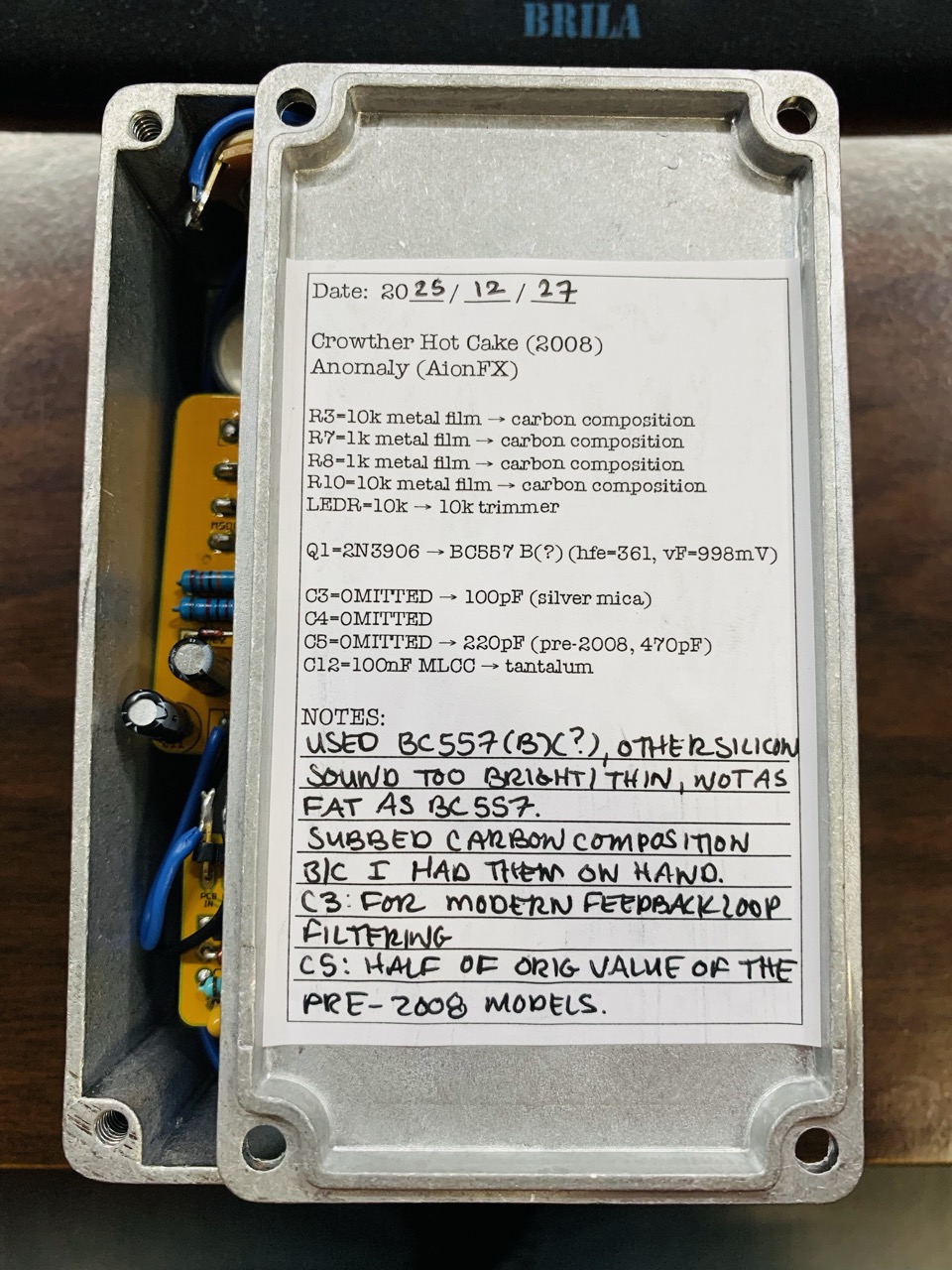
Below are my small adjustments (no significant value changes), along with notations explaining decision point(s):
Part    Value (Orig)   Value (New)    Notes
R3      10k            10k            Metal film -> carbon composition
R7      1k             1k             Metal film -> carbon composition
R8      1k             1k             Metal film -> carbon composition
R10     1k             1k             Metal film -> carbon composition

C3      OMIT           100pF          Feedback resistor filtering (silver mica)
C4      OMIT
C5      OMIT           220pF          pre-2008 Hot Cake is 470pF
C12     100nF          100nF          MLCC -> tantalum

Q1      2N2906         BC557(B)(?)    Used in original Hot Cake(s)

LED     Red 5mm        Yellow 5mm     No technical reason
LEDR    10k            10k trimmer    Started doing this with more builds to tweak/adjust LED
                                      brightness across my pedal board
Design & Layout
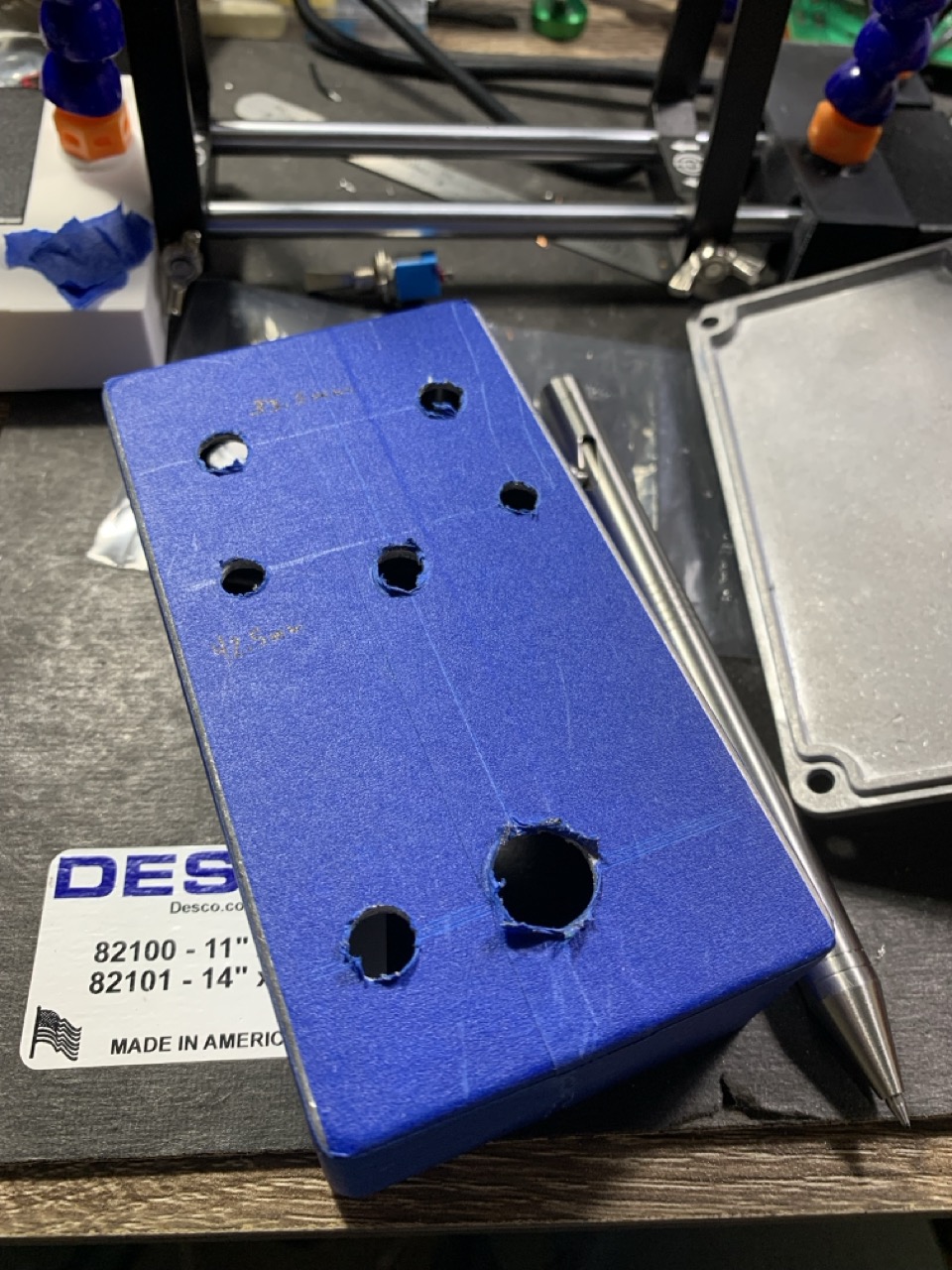
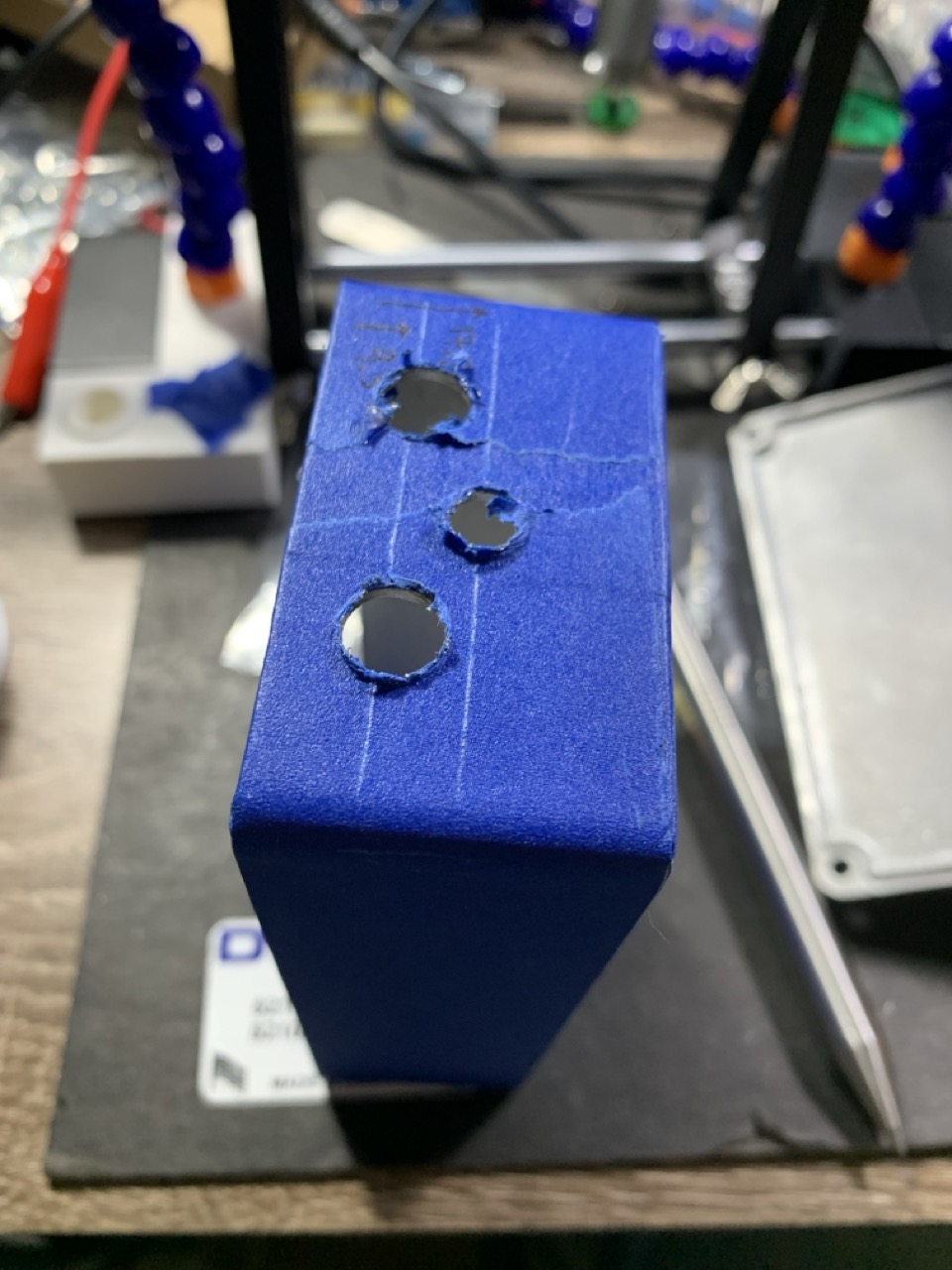
I stayed with the AioxFX knob and toggle switch layout, largely because it's all on-board mounted and doing any off-board configuration in a 1590N1 isn't happening.
|
|
|
|
Soldering & Assembly
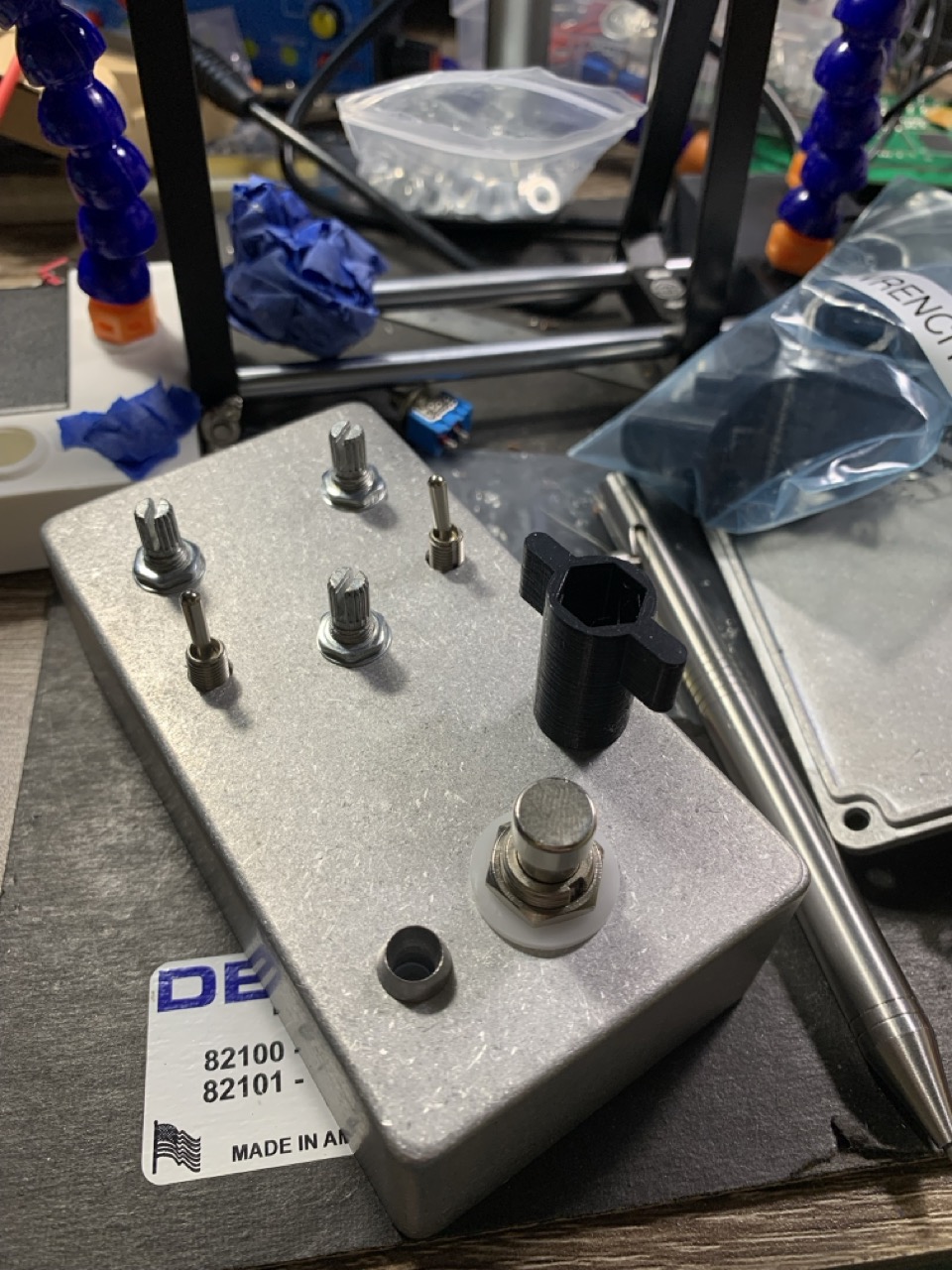
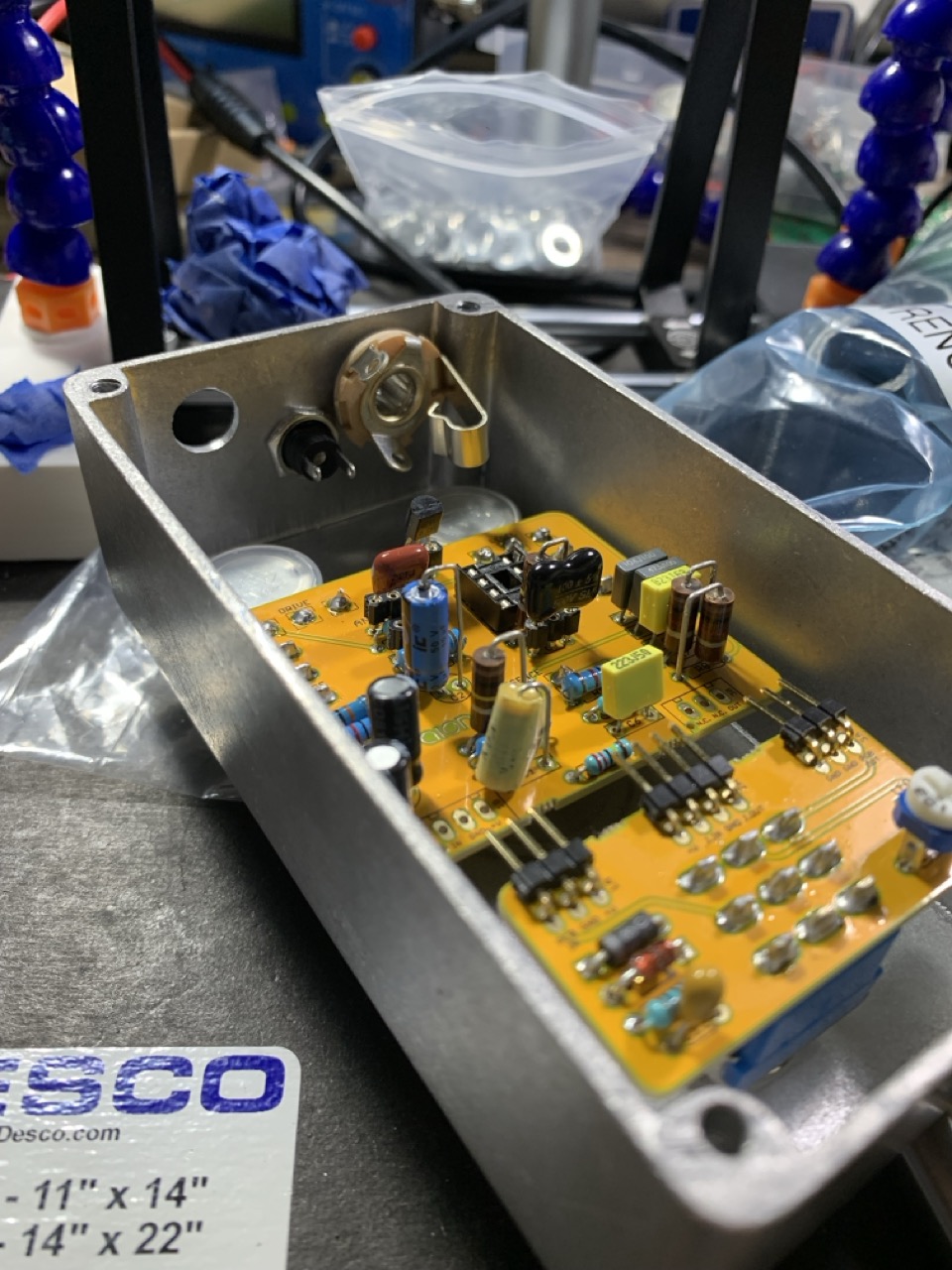
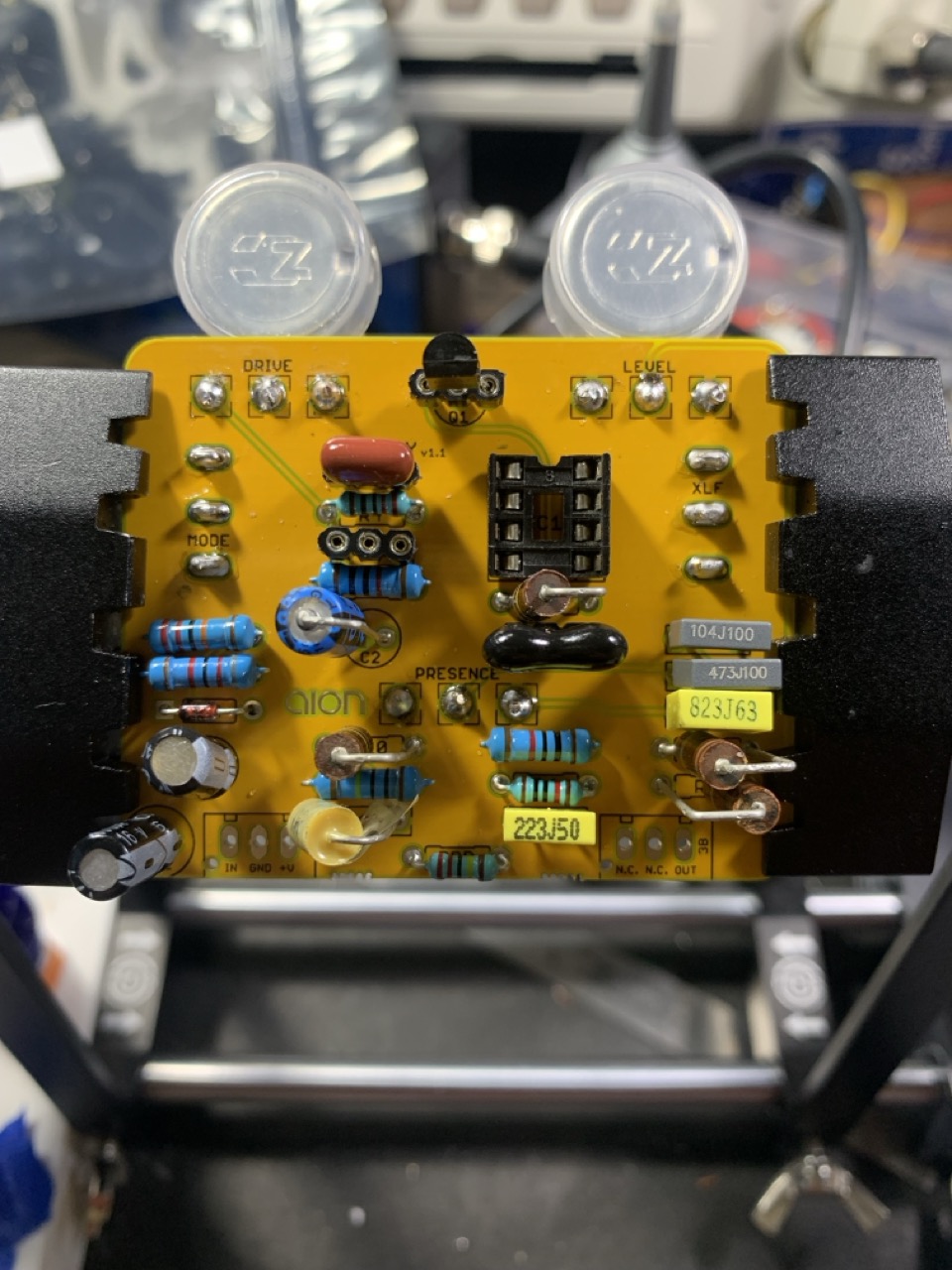
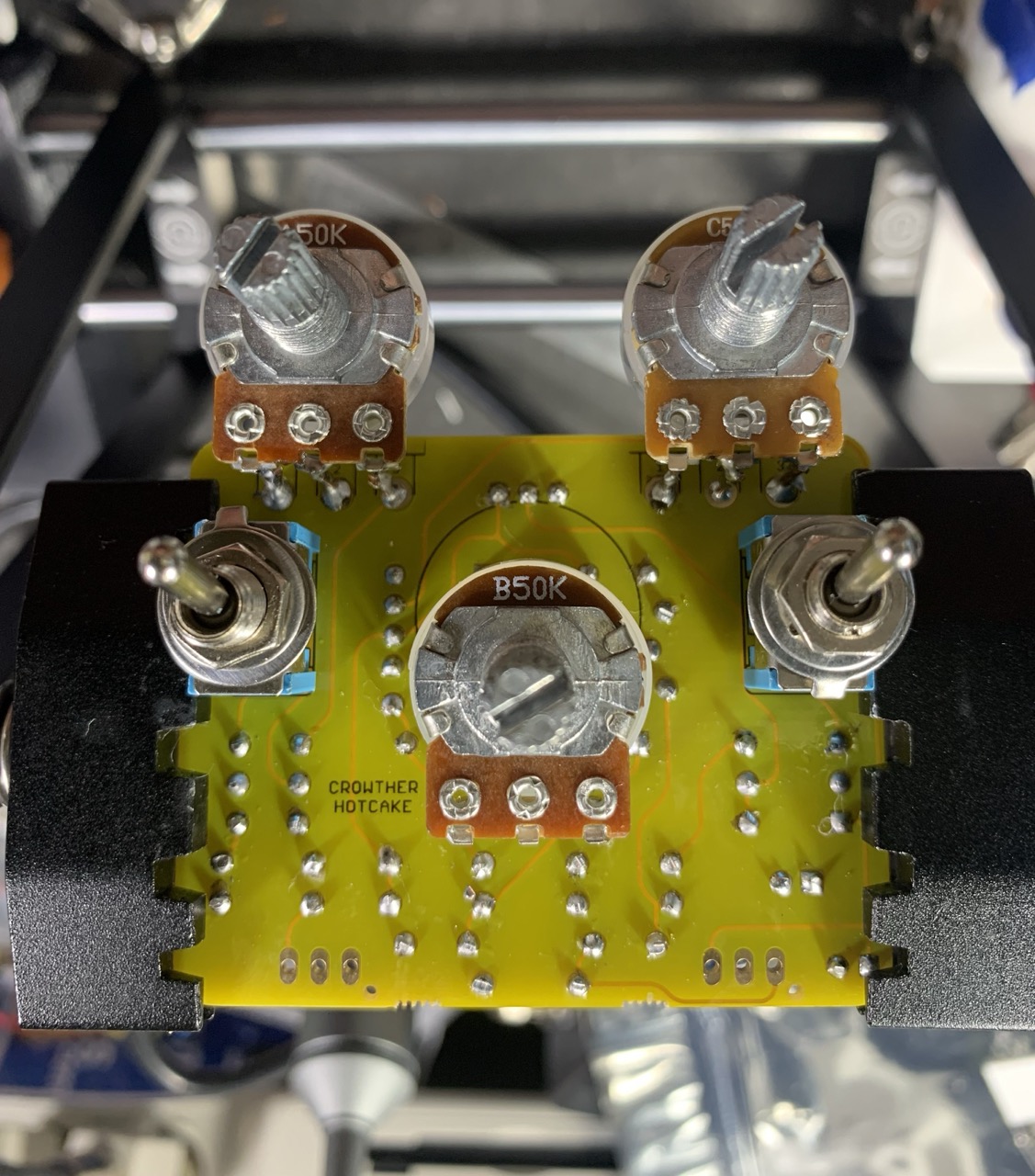
All dry fit just fine! I was concerned with three pots and two toggle switches, being off even 1-2mm is going to make this not work.
A side note: I don't use the provide drill templates; once the control components are soldered on, I measure all placement distance(s) with a digital caliper. It always works out just fine doing it that way; I've never had to sacrifice an 1590 case to the trash yet!
|
|
The Pedal
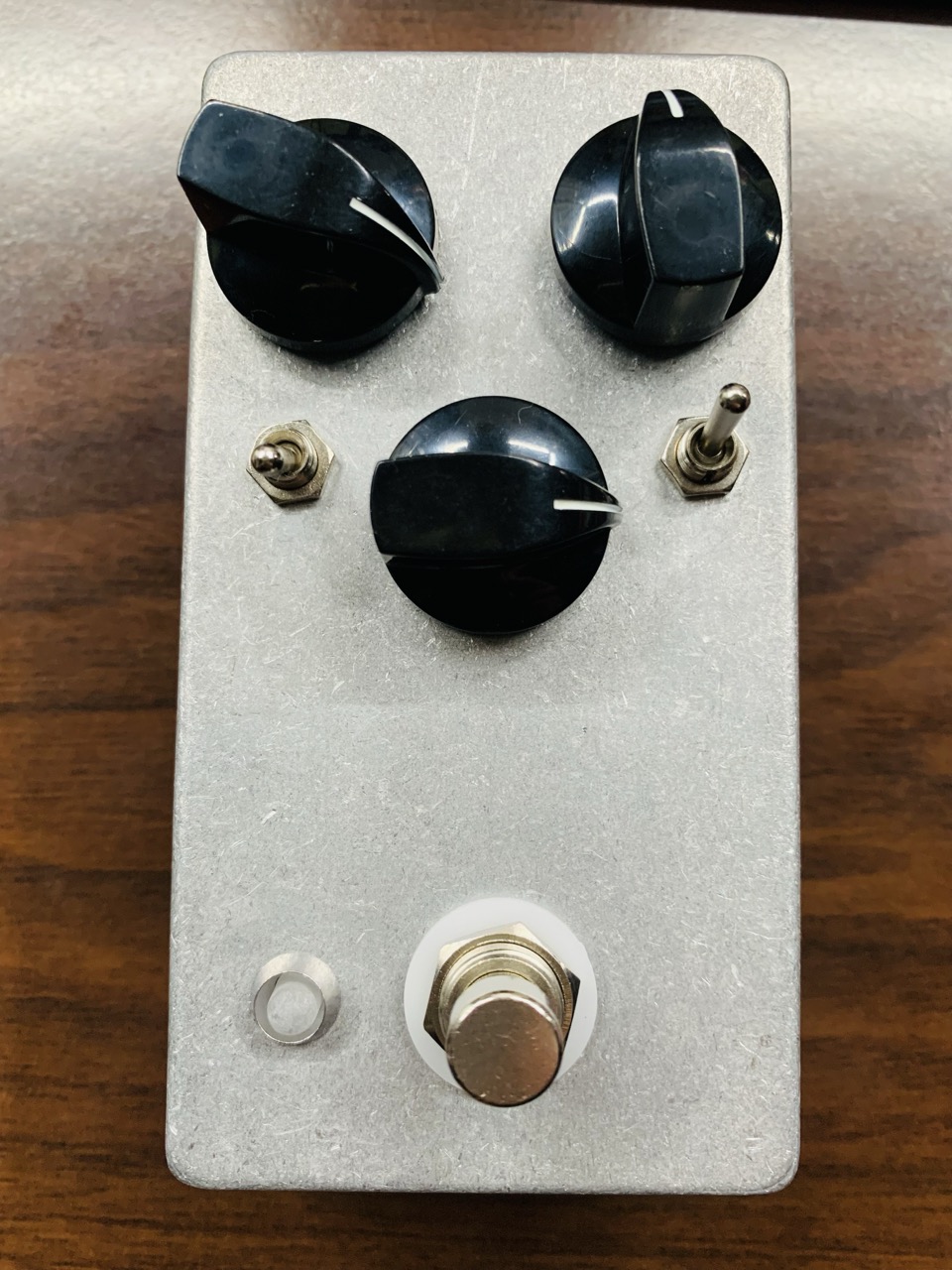
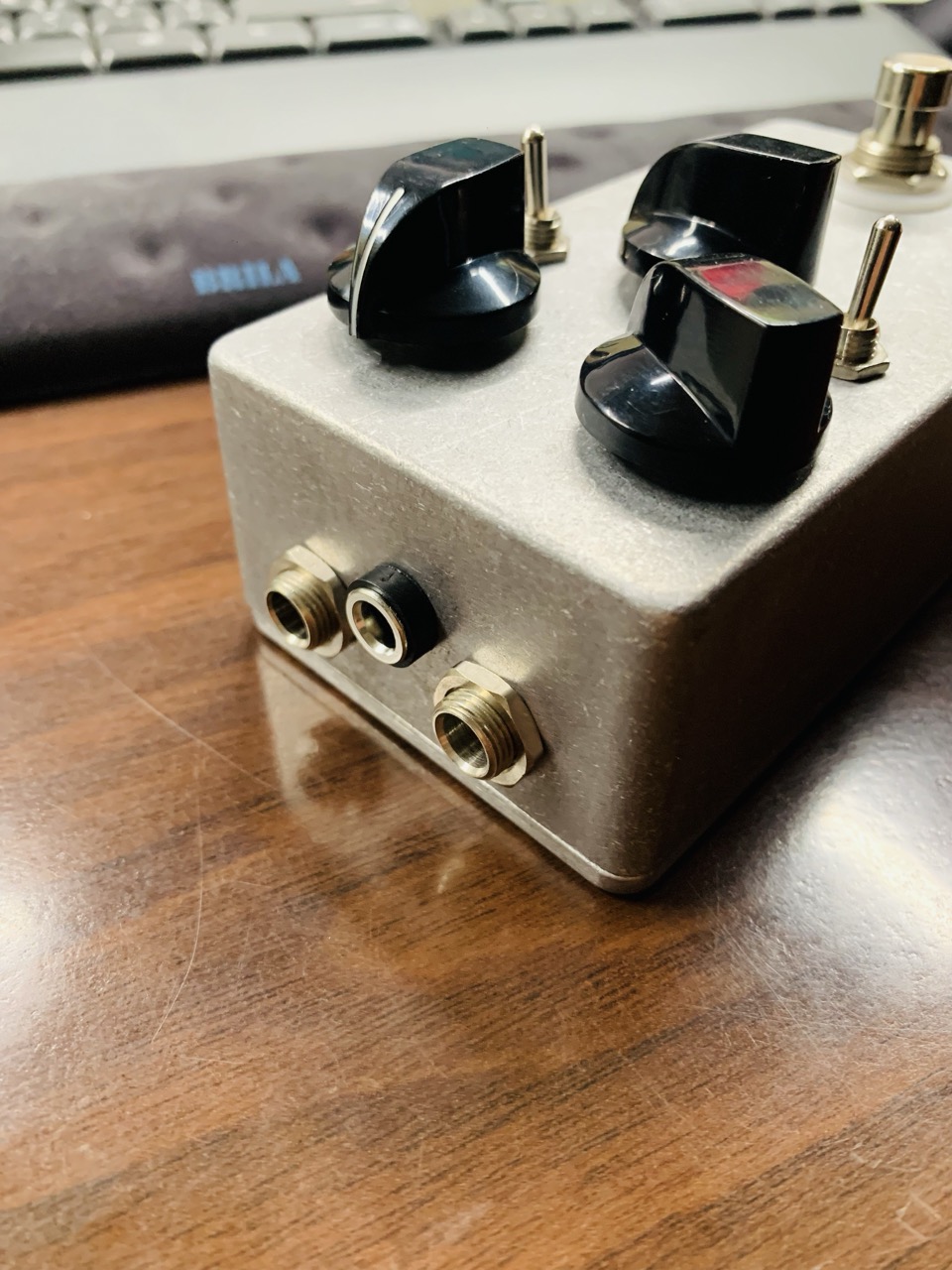
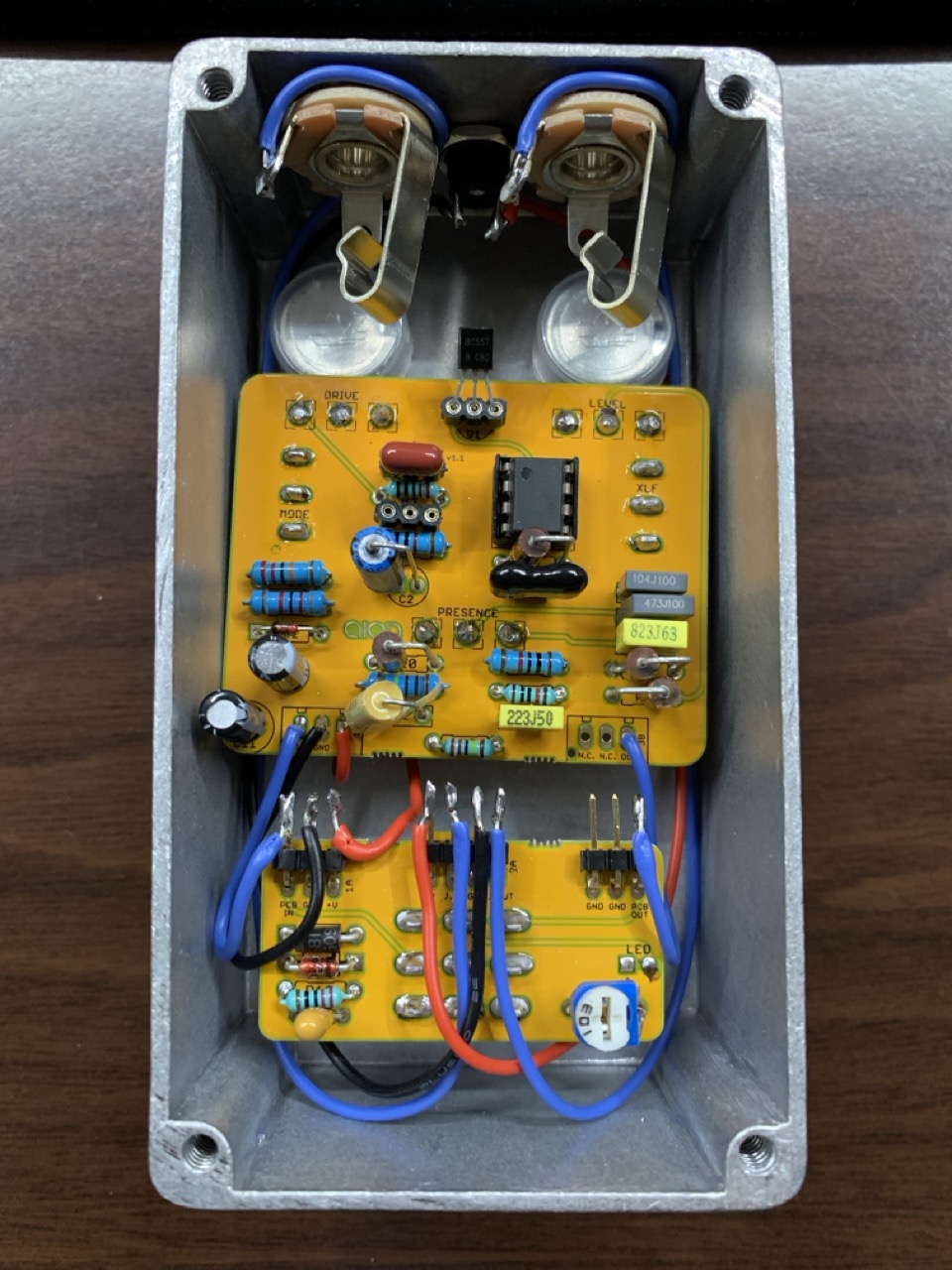
The final Crowther Hot Cake clone pedal completed, check it out:
|
|
|
|
Take-aways
Transistor Choice(s)
|
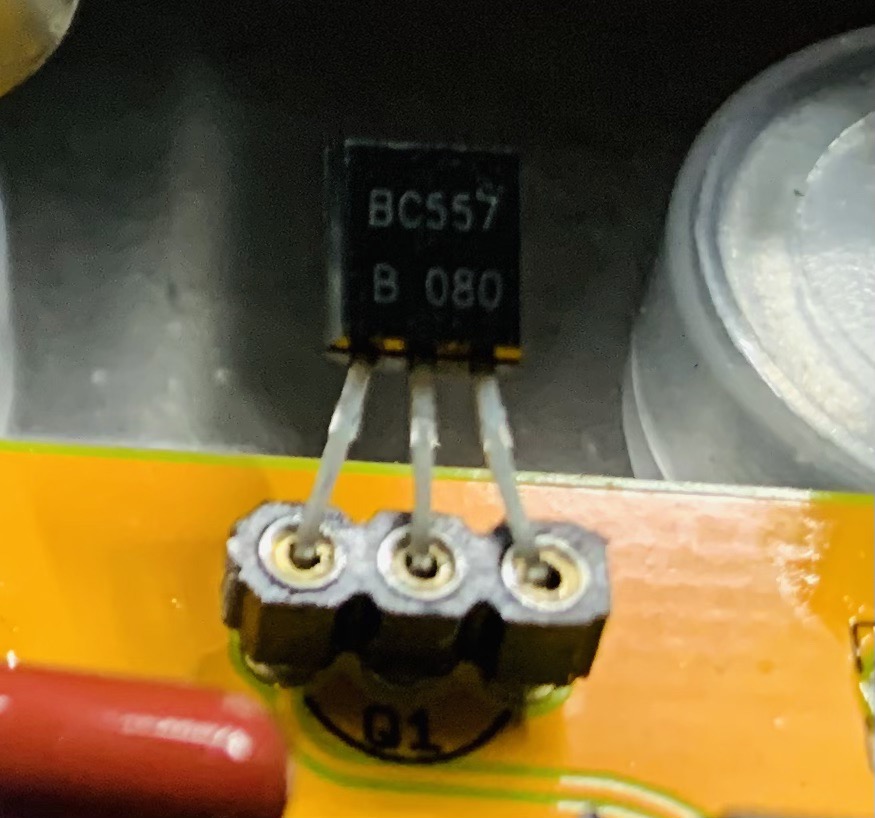
Staying as true to the Hot Cake build as I could, I chose the BC557. But here's my quick run-down of what else I tried:
- BC557 (B) (?) - The best (and Hot Cake original) choice for silicon transistor. This has a definite less bright (in a good way, low-end beefier-ness stayed in-tact) and different note-for-note compression I really liked (hfe=355, vF=1.01V)
- 2N3906 (B) (?) - This is a modern silicon PNP. A significantly brighter, but "thinner" tone by ear, not in a bad way, but not what I prefer (hfe=355~)
- S9015 (C) (?) - This is a modern silicon PNP. A significantly brighter, but "thinner" tone by ear, not in a bad way, but not what I prefer. Identical to the 2N3906 (hfe=394~)
For fun, I tossed in a germanium PNP:
- 2N1742 (Sprague) - A fairly new-to-me germanium PNP, lower hfe (~45) and leakage (~445mV). This did the germanium "thing" really well; definitely a smoother and fatter tone out of the gate, but not a direct drop in without completely adjusting the stock resistors around the MODE switch to bias it perfectly; it really let out a high audible feedback squawk toggling that to and from the zener diode. YMMV if you want to tinker.
How does it sound?
This has got a really great sound. Much like my favorite demo I linked to above; you can really get some great classic and modern rock tones out of this! I really dig MODE 2 (right toggle down position) and XLR 1 (left toggle up). I was playing some early first album Alex Lifeson Rush riff(s) and it right in that vein for sure. It really blends well from overdrive into distortion nicely and smoothly.
What I'm really blown away is how: - This does sound soft-clipped and gradually compressed without diode(s) - The transistor making a direct difference (to me) in mild note compression and tone brighteness/beefiness (see below)
The XLR toggle in my clone is as described in Aiox's build guide; it's almost undetectable, but barely subtle enough to detect it in change with my rig.
This pedal really responds well to a buffer and/or a clean boost in front of it, too.
For the DRIVE knob, going past 90%, it really starts to (overly) distort into this mega fuzzy, wooly distortion --- that personally isn't an always-usable tone to me, but maybe to others in a neck pickup scenario.
This is probably one of my very few pedals I've built (and kept) as-is from the build schematic and design. Great recreation job, AioxFX.